Report · Asia News Today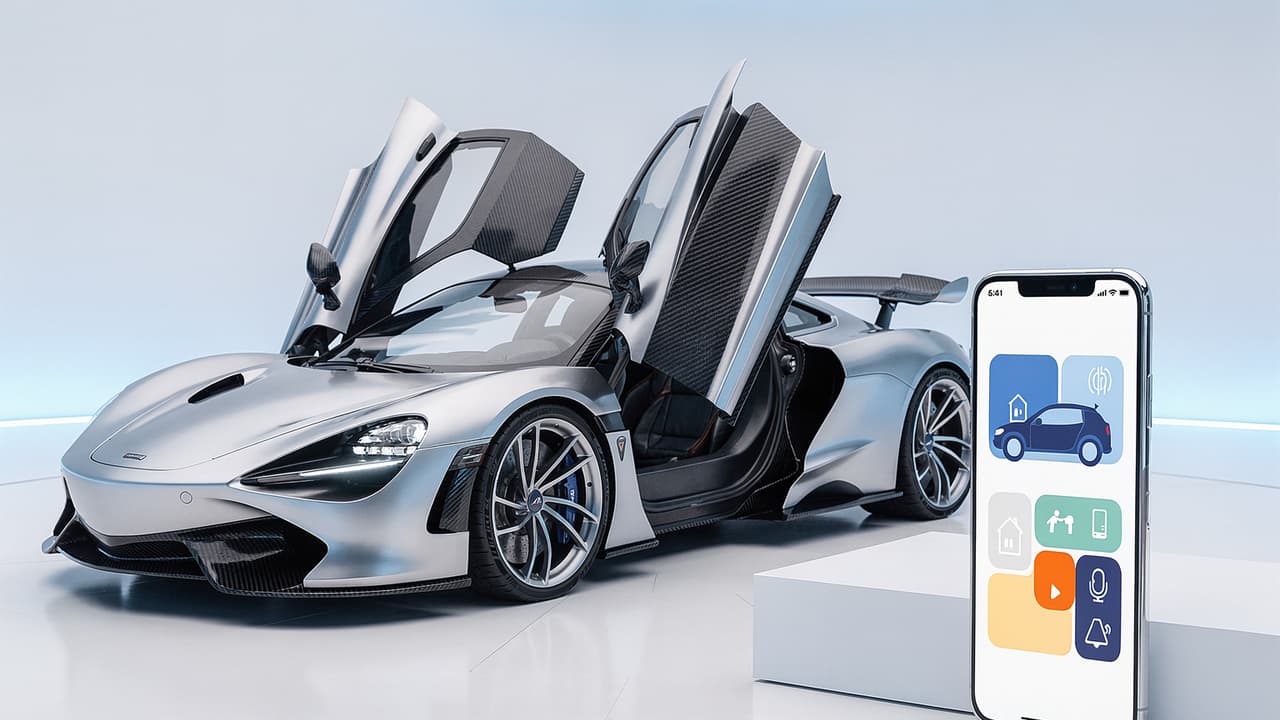
Xiaomi's new 18 Pro phones and its Vision GT concept car aren't two separate launches. They're the same strategy wearing different shells: get you on HyperOS once, and make leaving cost you your car, your lights and your phone all at once. Buy a Xiaomi 18 Pro this winter and you're not just buying a phone.
You're buying a key. The device was certified in Indonesia on October 12, and benchmark scores are already leaking ahead of its global rollout, according to Notebookcheck and ProPakistani. It runs on HyperOS, the same software stack sitting inside Xiaomi's SU7 and YU7 electric cars and inside the smart bulbs, vacuums and air conditioners the company has sold by the hundreds of millions.
Xiaomi calls the whole thing "Human x Car x Home." Look past the slogan and it reads more like a lock. The 18 Pro and 18 Pro Max launched in China on September 23. They pair Qualcomm's new Snapdragon 8 Elite Gen 6 and Elite Extreme Gen 6 chips with 200-megapixel main and periscope telephoto cameras, 2K LTPO displays hitting 4,000 nits, and batteries up to 8,500mAh, according to specs confirmed at launch and reported by Notebookcheck.
Prices start at ¥5,999, about $840, for the base Pro. None of that is why the phone matters to this story. What matters is that Lei Jun has said the series goes global "this year." The Indonesian certification, plus a fresh Snapdragon-confirming benchmark leak this week, tell you that rollout is now, not someday.
Back in March, at Mobile World Congress in Barcelona, Xiaomi unveiled the Vision Gran Turismo, an electric concept hypercar built for Sony's Gran Turismo 7 game. Series producer Kazunori Yamauchi personally invited Xiaomi to join a 28-year-old programme no Chinese automaker had touched before. It rides Xiaomi's own 900V silicon carbide platform, and posts a 0.29 drag coefficient and a 4.1:1 downforce-to-drag ratio that TechNode compared to Le Mans Hypercar machinery.
It's a halo object, not a sales vehicle. But it was never meant to sell units. It was meant to say, loudly, that Xiaomi now makes cars worth taking seriously, right as the company pushes its real production cars, the SU7 and YU7, toward 550,000 deliveries in 2026 after topping 410,000 in 2025.
Here's the mechanism underneath the marketing. HyperOS took Xiaomi more than six years to build. It lets a route planned on your 18 Pro appear on your SU7's dashboard the moment you sit down, then follow your music and climate settings back into your apartment through the same smart-home app that runs your air conditioner.
Counterpoint Research, in an analysis of the strategy, frames this as Xiaomi's deliberate move from a phone-plus-gadgets company into one selling a single operating layer across "over 200 product categories" and more than 700 million connected devices worldwide. That's not a feature. That's the pitch Apple has run for a decade with iPhone, Watch and HomePod: except Xiaomi is doing it with a car in the mix too, and at a fraction of Apple's prices.
Apple never shipped a car. That's the gap Xiaomi is racing to close before anyone else gets there. At IFA 2026 in Berlin this September, Xiaomi said it plans to put its electric cars on European roads by 2027.
The pitch, per Euronews, was explicit: cars that plug into the same connected system already running European buyers' Xiaomi phones and home gadgets. Spain's Motor16 put it more bluntly: HyperOS turns the car into an extension of the phone. Frankly, the strategy only works if you already own a Xiaomi phone.
Once you do, every additional purchase, a car, a rice cooker, a doorbell camera, gets cheaper to justify and harder to walk away from: switching means losing the thing that made all of it feel effortless in the first place. Apple figured out that trick with iMessage and AirDrop. Xiaomi is running the same play with a 900V supercar and a 200-megapixel camera as the bait, and a $840 phone as the door you walk through to get in.
Also read: Israeli ad firm Discover-Tech used its own network to plant Candiru spyware . Deep in the background: DeepSeek quietly pushed a new model update straight into its live API • Citi says Hong Kong's AI chip IPOs are shrugging off the US selloff This article is posted in Technology News , check it out for more related stories.
Source: Startup Fortune